

The UK Government and DVSA intend to scrap BE trailer testing in Great Britain
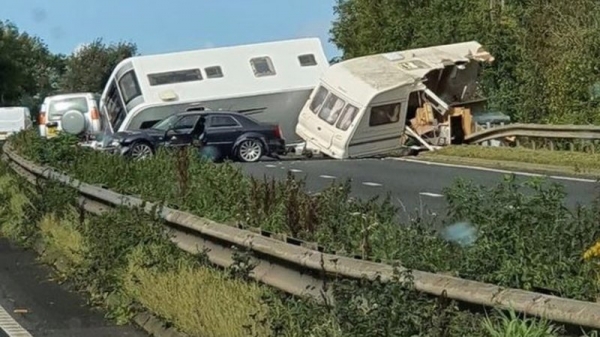
We ask the DVSA for answers to our concerns over road safety following this highly dangerous move which will undoubtedly lead to more crashes involving vehicles towing trailers.
In a direct email to the DVSA Chief Executive, Loveday Ryder, we ask the questions that are so far falling on deaf ears. Every road safety and driver training professional agrees that this is a dangerous move.
16th September 2021
Good evening Ms. Ryder
The announcement we received via the DVSA email last Friday afternoon regarding the future of vocational testing is, quite frankly, terrifying.
To an observer with an understanding of road safety, it appears the government has carried out it’s populist, tick box exercise and ignored the road safety facts.
The removal of the graduated C to CE process and the outsourcing of the reverse and trailer drop exercises Is an unknown quantity but I know of at least one vocational examiner who immediately resigned on this matter due to concerns for road safety. Without exception every vocational examiner we have spoken to is against these moves.
As for the scrapping of BE testing these are the facts……

Safety Considerations
- Trailers in the BE category can weigh as much as 3500kgs and have cornering and braking characteristics significantly different (worse) when compared to the towing vehicle.
- The risks associated with trailer handling characteristics are magnified significantly when trailers are used in an unsafe or unroadworthy condition.
- Accelerating with a heavy trailer significantly reduces the speed at which a vehicle can emerge from a junction and combined with the additional length of the vehicle, means the driver has to understand how to judge suitable gaps at junctions and roundabouts.
- Navigating tight corners and junctions requires a different line when towing a trailer in order to avoid mounting the kerb, striking pedestrians and other vulnerable road users, other vehicles and / or property.
- Coupling and uncoupling trailers of this type can lead to serious personal injury and damage to the vehicle, trailer and / or other property if carried out incorrectly.
- Reversing with a trailer is totally different to reversing a car or van. There are many more considerations to take into account regarding steering technique, positioning, observation and vehicle sympathy. Again, carried out incorrectly there is significant risk of injury to bystanders and damage to the vehicle, trailer and / or property if carried out incorrectly.
Indeed, as recently as May 2019, figures from Highways England, the government organisation in charge of the country’s motorways and major A-roads, said around 4,000 accidents a year involved trailers of one description or another. That’s an average of just under 11 per day. As a result, Highways England was then calling on drivers to ensure their trailers and caravans are towed in the safest way possible. The organisation urged drivers to make sure they have the right licences to tow their trailer, and to ensure the vehicle and trailer are loaded properly. Allowing untrained, unqualified drivers to tow heavy trailers will increase the number of these incidents.
Testing Data
- Between April 2012 to March 2021 the DVSA conducted 200,732 BE driving tests.*
- This represents an income to the DVSA of over £23million.
- In November 2013 the DVSA made it mandatory to use loaded trailers on BE tests.
- Of these 200,732 tests there were 139,345 passes*
- This means there were 61,387 candidates that failed.*
- This is a pass rate of 69.42%*
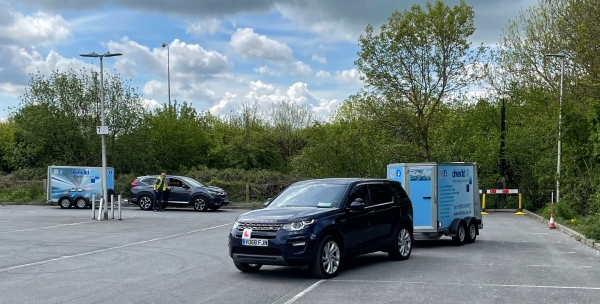
- Due to the minimum test vehicle requirements for a BE test, the vast majority of candidates take their test in a trainer’s vehicle and trailer combination following a training course.
* Source: Table DRT0221
Practical car and trailer test pass rates by gender, monthly, Great Britain, from April 2012 to March 2021,
17 June 2021 update
Analysing these figures:
- The DVSA and the UK Government concurred, that trailers on driving tests should carry a load to greater represent the characteristics of real-life driving with these types of vehicles.
- Even with the majority of candidates taking some training prior to test, the BE test pass rate is only just over 69%.
- This means that over 30% of candidates did not reach the standards required to obtain a BE towing licence.
- In effect, abolishing the BE test requirement would have therefore allowed these candidates to tow anyway. That’s a total of 61,387 drivers.
- In reality, the number of drivers who will now be allowed out on the road and will not be up to the BE test standard will be much higher since a high number of candidates take training BECAUSE THEY KNOW THEY HAVE TO TAKE A TEST! Without a formal test, many people would not invest in training, preferring to save the money and ‘make it up as they go’. On that basis, how much worst would the Highways England statistics referred to earlier be for trailer related incidents?
These figures surely illustrate there is an increasing need for a formal BE driving test? Whichever way the figures above are interpreted, they definitely do not show abolishing the BE driving test is a sensible option. To tell us, as trainers, that the public should still take training is, quite frankly, insulting. We all know that voluntary training program is unlikely to have a high take-up if drivers already have the licence entitlement. As an example of how the public perceive ‘voluntary road safety’ one only has to look at the poor take-up of Pass Plus among new drivers. Consider this, would drivers ‘volunteer to pay for’ for a speed awareness course if they weren’t dodging penalty points on their licence?
As a further point, whenever we start a BE course with a client, we cannot recall a single candidate in over 18 years of BE instruction, who was at a sufficiently high level of ability and knowledge that they could have passed a BE test without any training. There is no doubt removal of BE testing will lead to an increase in trailer related crashes and incidents with a corresponding rise in deaths and serious injuries.
Road safety has taken a huge step backwards in the UK.
So, in order for us to understand the decision making process at government and DVSA level, to understand why so many BE instructors (who have invested heavily in vehicles, trailers, training, lease or purchase of training sites etc) are now unemployed, to be able to advise our own clients why the situation regarding trailer licencing for their staff has changed, please can you advise the following (The consultation was a public consultation, therefore I imagine this information is available):
Where can we find the following details of the consultation discussions after the consultation closed?
-
Where are the minutes of any discussions recorded?
-
Who was present at those discussions?
-
Was the outcome of the consultation only dependant on the multiple choice answers to the questions or were the road safety statistics that we and many others provided as supporting evidence taken into consideration?
-
What has changed among the road crash data in the UK that suddenly means that unsafe BE drivers are now safe?
-
What calculations on increase in road fatalities and serious injuries have been made and what increase has been deemed to be ‘acceptable’ as the collateral fallout of these new measures?
-
What support to businesses and individuals will be available who have now, suddenly, found themselves effectively out of work?
At Drivex our business is all about managing occupational road risk.
DVSA says ‘Safe driving for life’
Your own LinkedIn profile states: ‘Chief Executive Officer at Driver Vehicle Standards Agency, helping you through a lifetime of safe driving, helping you keep your vehicle safe to drive and protecting you from unsafe drivers and vehicles’.
The DVSA created the Standards Check in place of the Check Test. A large part of the mantra we were given about the new Standards Check was about the instructor and candidate working together in identifying and managing the risks associated with their actions.
In January 2022 our Fleet ADI Course is scheduled to have its reaccreditation visit by a high-ranking DVSA official and a DVSA Enforcement Officer. Fleet ADI work is very largely about identifying, analysing, reducing and managing road risk and the personal responsibility the driver takes in this.
DVSA and UK Government this week announces changes to driver licencing and testing rules which every driver training and road safety professional knows will increase road risk.
I have to say that we at Drivex we are currently struggling to see how we can take any future advice from the DVSA regarding road risk seriously without understanding the answers to these questions.
Kindest regards
Steve Cocks B.Sc.
Director
Drivex Ltd.
01983 810012
steve@drivex.co.uk